
What fish do we
target in Hawai‘i?
Not every fish on the reef is fair game, and which fish we hunt is the whole point. We target the invaders that damage the reef and leave the natives that keep it healthy.
Know them before you hunt them
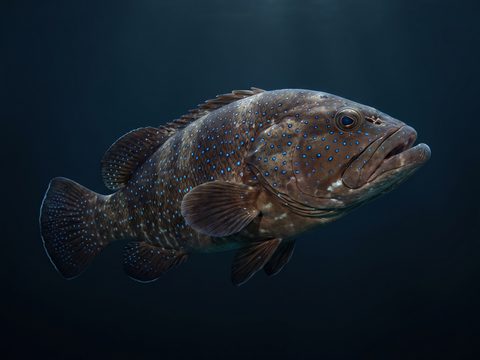
Roi
Introduced to Hawai‘i in the 1950s, a single roi eats roughly 150 native reef fish per year. We remove every one we can, but we never eat them due to ciguatera risk. Removed roi become organic fertilizer through our Reef-to-Root program.
INVASIVE · PRIORITY TARGETFull species guide →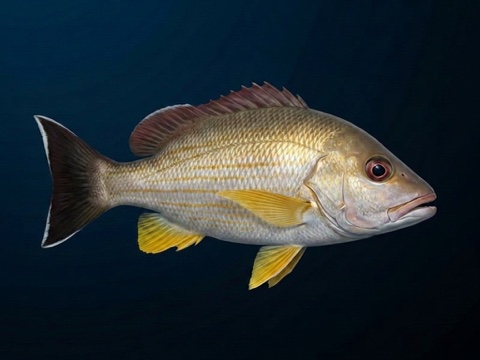
To‘au
An introduced snapper competing with native species for food and habitat. The upside: it’s delicious, and every one removed helps the reef.
INVASIVE · EXCELLENT EATINGFull species guide →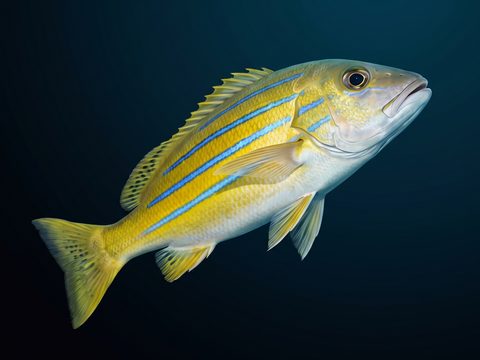
Ta‘ape
Introduced in the same era as the roi, ta‘ape school in large numbers across Kona’s reefs. Great first target for new hunters, and great on the table.
INVASIVE · EXCELLENT EATINGFull species guide →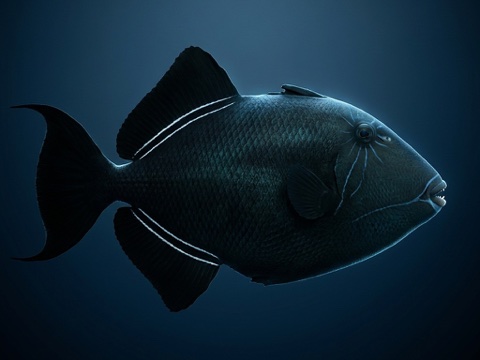
Hagi
The forgotten fish. Hagi sat on restaurant menus across Hawai‘i in the ’50s and ’60s. The flavor never changed, only tastes did. Misoyaki or sweet shoyu and sugar: it belongs back on the table.
NATIVE · LOCAL FAVORITEFull species guide →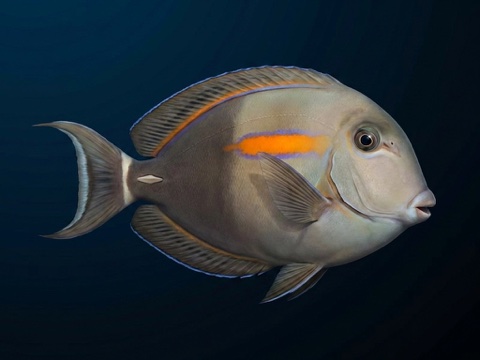
Na‘ena‘e
A traditional Hawaiian table fish named for the violet-edged orange band on its shoulder. Works the sand flats beside the reef, and takes a careful hand: every surgeonfish carries a scalpel at the tail base.
NATIVE · TRADITIONAL TABLE FISHFull species guide →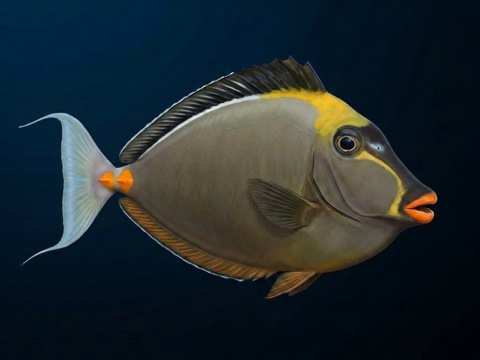
Umaumalei
A traditional Hawaiian food fish taken selectively. Your guide will teach you when a fish is a target, and when it isn’t.
NATIVE · SELECT HARVESTFull species guide →Prized natives & bluewater
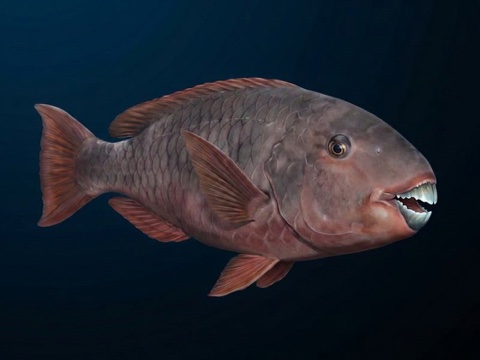
Uhu
Colorful and abundant on Big Island reefs, Uhu are a staple spearfishing target, and a fish we take with real care. All parrotfish are born female: the big blue terminal-phase males morphed from females for breeding, so we typically let them swim and take initial-phase fish selectively. Excellent eating: firm white flesh with a mild, sweet flavor.
How we hunt them: Uhu are often found grazing on algae-covered rock and coral. They are not particularly wary but will spook if approached too quickly. Look for them in 10–30 ft on lava reef. Aim for the head/spine for a clean shot. And if it's a big blue terminal-phase male, we let it swim. The breeders keep the uhu population healthy.
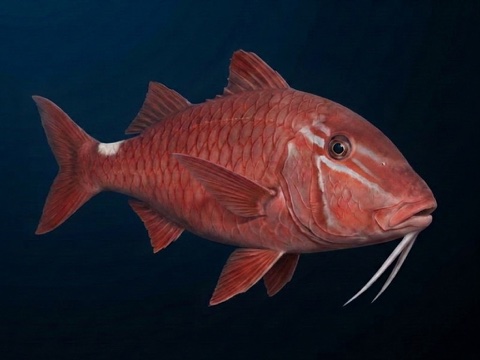
Kumu
The red-and-white kumu is one of Hawaii's most prized eating fish. Found on sandy bottoms and reef edges, they use their chin barbels to probe the sand for prey. Highly sought after and considered a delicacy in Hawaiian cuisine.
How we hunt them: Kumu are found on sandy patches near the reef, often in small groups. They’re skittish, so approach slowly from above and wait for them to settle. Best hunted at dawn when they are actively feeding. A short, accurate shot is key.
Uku
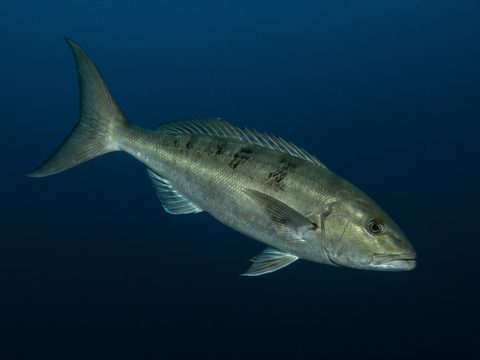
A prized native snapper taken selectively and within all state regulations. One of Hawai‘i’s finest eating fish.
How we hunt them: Uku school in mid-water and are best approached with a slow, patient descent. They are curious and will often circle a stationary diver. Use a long gun (110cm+) and aim for the head. Best hunted at deeper reef edges and channel mouths.
'Ōmilu
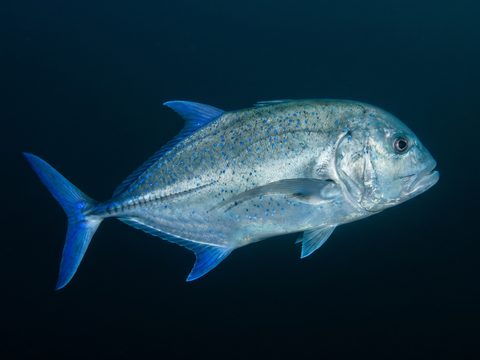
The electric-blue spotted trevally is one of Hawaii's most beautiful reef fish. Smaller than Ulua but equally aggressive, 'Ōmilu are found throughout the reef and are excellent table fare. A great target for intermediate spearfishers.
How we hunt them: Often found hunting in pairs or small groups along the reef. They respond well to flashers and are less wary than Ulua. Target sandy patches adjacent to reef structure where they ambush prey.
Ulua
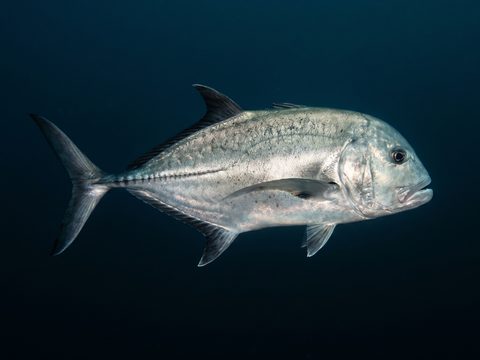
The ultimate Big Island trophy fish. Giant Trevally are powerful, fast, and highly prized by spearfishers. They patrol reef edges, channel drop-offs, and open water. They take stealth and a well-placed shot, and they will test your gear.
How we hunt them: Approach from down-current and use the reef structure as cover. Ulua are curious. A slow, deliberate approach often works better than chasing. Target the channel edges at dawn and dusk. Use a reel gun with 200+ lb shooting line for large fish.
Kahala
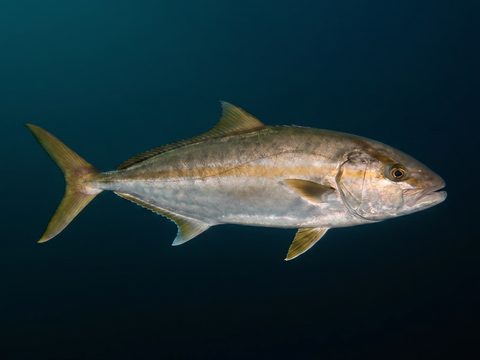
A large, powerful pelagic species found around offshore structure and seamounts. Kahala are aggressive hunters and will follow other fish to the surface. Excellent eating when bled immediately. Can carry ciguatera, so check local advisories.
How we hunt them: Kahala are often found with other large pelagics. They are bold and will approach divers. Use a reel gun with strong line. Bleed immediately after the shot to improve flavor and reduce any toxin concentration. On the Kona coast, deep water sits close to shore, so we find them along steep drop-offs and ledges within reach of a shore dive.
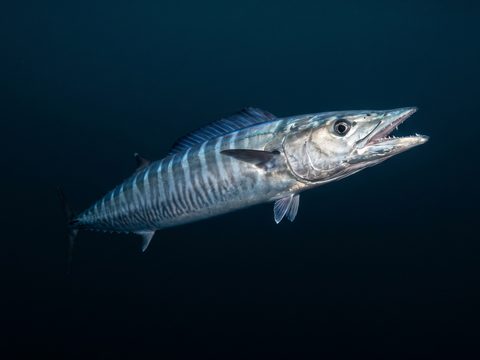
'Ono
One of the fastest fish in the ocean. 'Ono are razor-toothed pelagic hunters found in open water and around offshore structure. Exceptional eating. Some say the best fish in Hawaii. Extremely challenging to spear due to their speed.
How we hunt them: 'Ono are extremely fast and require a perfectly timed shot. They often make a single pass, so be ready. Use a reel gun with heavy line. They have razor-sharp teeth, so handle with care. Fall and winter are the best months, when ʻono patrol the deep ledges and drop-offs along the Kona coast.
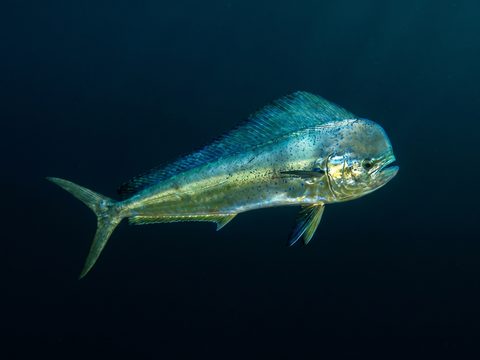
Mahi-Mahi
A spectacular pelagic species with brilliant colors. Mahi-Mahi are fast, acrobatic, and excellent eating. Found in open water around floating debris, weed lines, and offshore structure. Off Kona, the blue water starts close to shore.
How we hunt them: Mahi-Mahi are found around floating debris and weed lines offshore. They are curious and will often circle a diver. Use a long gun with a reel. They’re fast, so lead the shot slightly. Spring and summer are the best months, when warm blue water pushes in close to the Kona coast.
How we hunt responsibly
We strictly follow all State of Hawai‘i size and bag regulations, then go further. Just because a species isn’t regulated yet doesn’t mean it shouldn’t be.
Fish identification comes before anyone takes a shot. Your guide is in the water with you and confirms every target, so you’ll always know what you’re looking at and why it is, or isn’t, a target.
Reef to Root: where the roi go →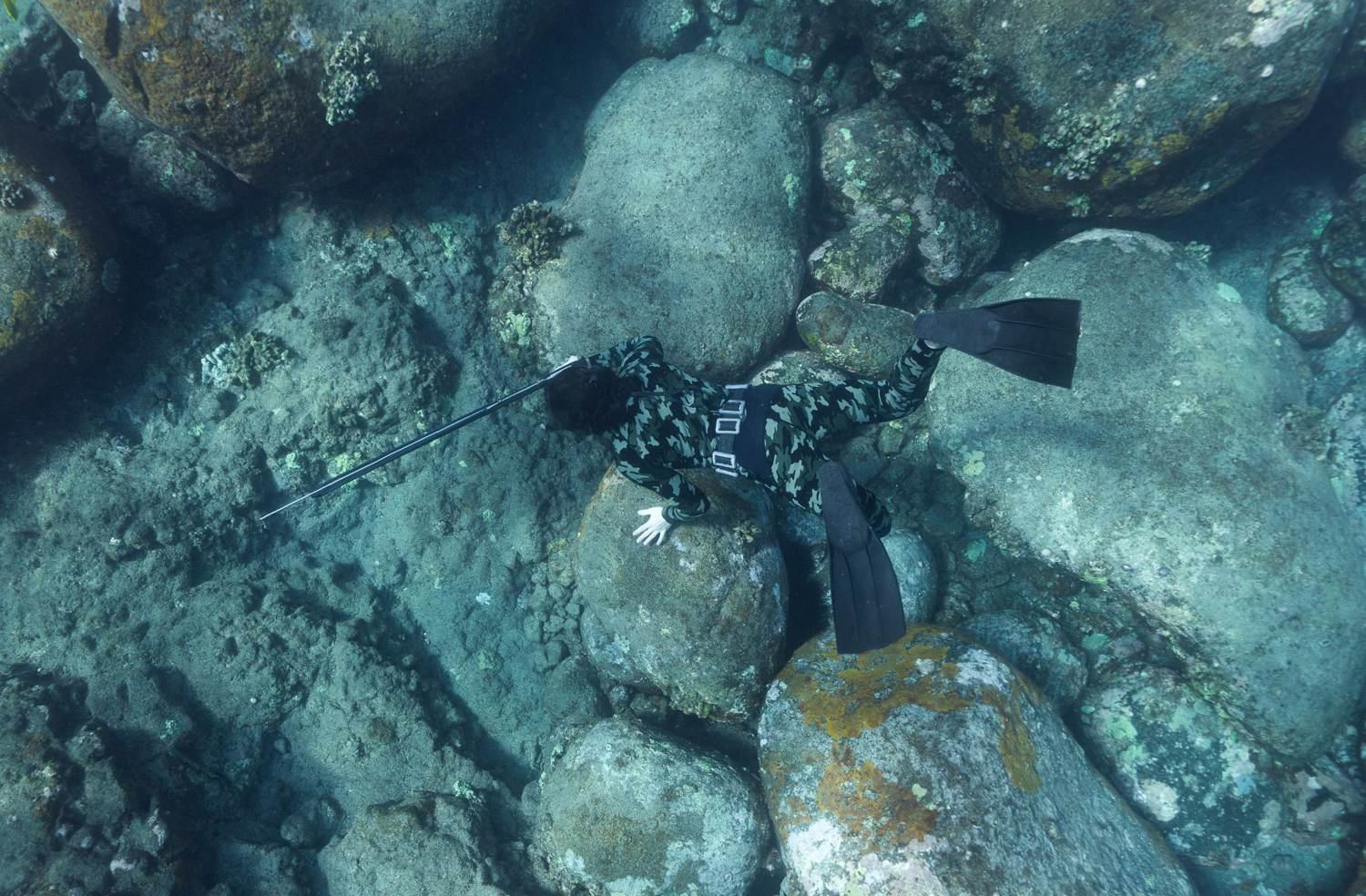
Fish FAQ
Do I need to identify fish myself?
No. Your guide confirms every target before you shoot. Fish ID is part of what you’ll learn.
Can we eat what we catch?
Most target species like to‘au, ta‘ape, and uku are excellent eating. The exception is roi, which we remove for the reef’s sake but never consume due to ciguatera risk. Everything else you spear is yours to take home — we clean it, bag it, and send you off with a good recipe. The roi we remove goes to Kona Coast Nutrients and becomes organic fish-hydrolysate fertilizer. Nothing wasted.
Is spearfishing legal in Hawai‘i?
Yes. Spearfishing while freediving is legal and deeply rooted in Hawaiian tradition. We operate under commercial licenses and follow all state regulations.